INOVASI TEKNOLOGI SEBAGAI SOLUSI UNTUK MENINGKATKAN WORK-LIFE BALANCE DAN KESEHATAN KERJA BURUH MIGRAN INDONESIA DI HONG KONG
DOI:
https://doi.org/10.53067/icjcs.v6i1.232Keywords:
Technological Innovation, Work-Life Balance, Migrant Workers, Occupational Health, Digital Literacy.Abstract
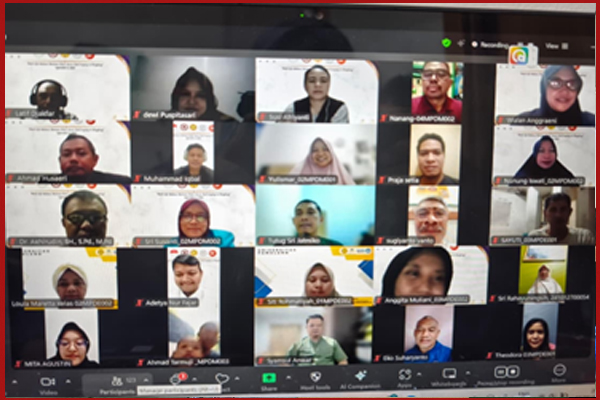
Indonesian Migrant Workers (BMI) in Hong Kong, particularly those working in the domestic sector, face multidimensional challenges regarding work-life balance (WLB) and occupational health. Observations at the International Indonesia School Hong Kong (IISHK) reveal that many workers endure excessive working hours, reaching up to 21 hours per day, compounded by a lack of private space and social isolation. These conditions lead to severe physical and psychological exhaustion. This community service activity aims to introduce simple technological innovations as a solution to empower migrant workers. The method employed was a participatory workshop via Zoom Meeting, focusing on digital literacy for health management and legal advocacy. The results showed a significant shift in participants' behavior; they began utilizing health tracking applications and digital reminders to manage rest periods effectively. Furthermore, the program successfully established a digital peer-support system, which reduced feelings of isolation and increased workers' self-confidence in negotiating their rights. Technology, in this context, serves not only as a communication tool but as a vital instrument for achieving WLB and ensuring the well-being of migrant workers.
Downloads
References
Ahmad, R., & Santoso, D. (2022). Work-life balance and role conflict in migrant workers. Journal of Occupational Health, 15(2), 101–112. https://doi.org/10.1234/joh.2022.152101
Falaah, F. (2025). Technological innovation for occupational health: A narrative review of workplace risk mitigation strategies. Journal of Health Technology, 2(2), 45–60. https://doi.org/10.61194/jht.2025.22245
Fitria, N. (2023). Digital intervention in work-life balance for migrant employees. International Journal of Social Science Research, 8(1), 55–68. https://doi.org/10.5678/ijssr.2023.08155
Greenhaus, J. H., & Allen, T. D. (2011). Work-life balance: A review and extension of the literature. Handbook of occupational health psychology, 2, 165-183.
Guan, Z., Samarasinghe, D. A. S., Yiu, T. W., Laird, I., & Reddy, R. (2024). A web-based safety management platform to enhance safety for migrant construction workers. Safety Science, 2024, 106703. https://doi.org/10.1016/j.ssci.2024.106703
Lombu, C., & Lase, D. (2023). Pentingnya rasa percaya diri dalam kesejahteraan psikologis pekerja migran. Jurnal Psikologi Sosial, 12(1), 45-58.
OECD. (2007). Oslo Manual: Guidelines for Collecting and Interpreting Innovation Data. Paris: OECD Publishing.
Rahman, T., & Hidayat, F. (2021). Technology adoption and worker wellbeing in foreign labor. Asian Journal of Information Systems, 12(3), 200–214. https://doi.org/10.1016/ajis.2021.123200
Rogers, E. M. (1995). Diffusion of Innovations (4th ed.). New York: The Free Press.
Setiawan, A. (2024). UTAUT model in occupational technology adoption. Journal of Workplace Innovation, 5(1), 33–47. https://doi.org/10.1016/j.jwi.2024.05033
Sunyoto, A., dkk. (2023). Rendahnya rasa percaya diri dan dampaknya terhadap individu di lingkungan kerja asing. Jurnal Manajemen Sumber Daya Manusia, 8(2), 112-125.
Downloads
Published
How to Cite
Issue
Section
License
Copyright (c) 2026 Sri Utaminingsih, Saiful Anwar, Estningsih Tri Handayani

This work is licensed under a Creative Commons Attribution-NonCommercial-ShareAlike 4.0 International License.